
The specification in your contract sets the requirements. On TMR works, sprayed seals fall under MRTS11 Sprayed Bituminous Treatments (Excluding Emulsion), July 2025, or MRTS12 where the binder is an emulsion. On council work, the council's own specification and contract govern, and they can build on TMR's: Brisbane City Council's S330 for sprayed bituminous surfacing is one example. Checking a sprayer before you award the work? Read our guide to engaging a bitumen spraying subcontractor.
To price the spraying, send what you have:
the specification and any annexures, or the full tender documents
the plans or drawings, with the areas to be sealed
the treatment and binder, if the seal design has been done
the location and the council area
the program: when each area will be ready, any staging and the hold points
who provides traffic management, and how the site is accessed
the records and paperwork the contract asks the sprayer for, such as spray sheets, a safe work method statement (SWMS) and certificates of currency
You can also email documents to admin@cuzkell.com.au or call (07) 5447 6619, Monday to Friday, 6am to 6pm.
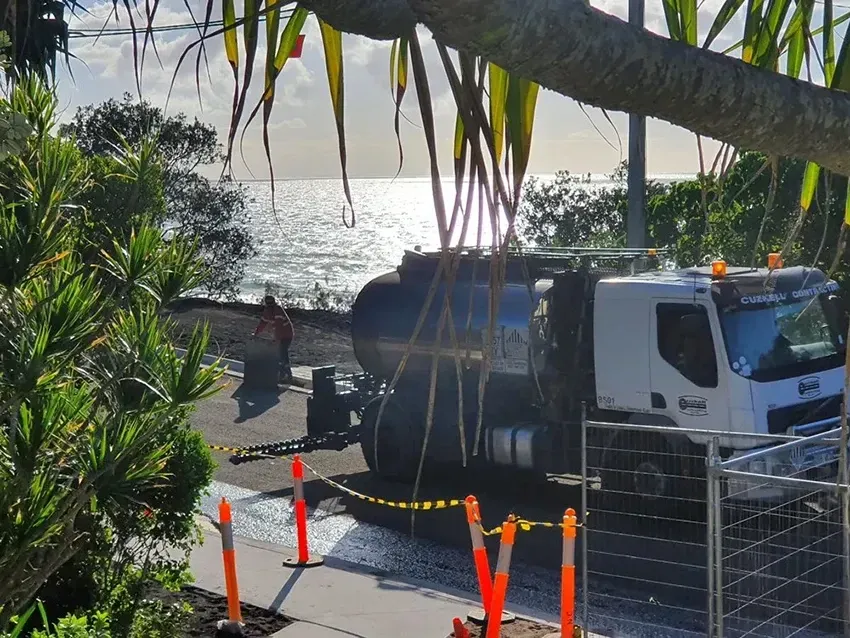
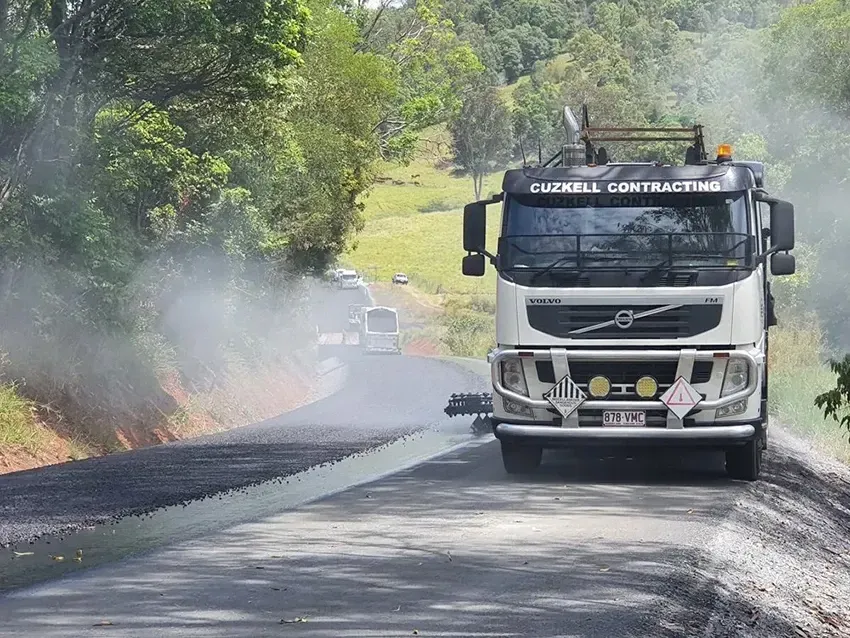
Bitumen spray sealing is a road surfacing method where a layer of hot bitumen is sprayed onto a prepared base and covered with aggregate (stone). The bitumen acts as a binder, holding the stone in place and forming a protective, skid-resistant surface. This method is commonly used on rural roads, driveways, car parks, and low to medium-traffic areas. It’s a cost-effective alternative to asphalt and is known for its flexibility, allowing the surface to expand and contract with changing temperatures.
Spray sealing can be applied as a single or two-coat treatment depending on usage and site conditions, and is often used to reseal existing surfaces or finish newly constructed roads.
On average, resealing is recommended every 10 to 15 years, depending on factors such as traffic volume, climate, and the condition of the surface. In high-use or exposed areas, reseals may be required sooner. Regular inspections can help identify when a surface is starting to break down and when a reseal would be most beneficial.
Sealing alone is not intended to repair major damage. Before a seal is applied, the surface should be inspected and prepped—this often includes filling potholes or cracks to create a uniform base. Once prepared, sealing can help prevent those issues from recurring by forming a protective barrier over the surface.
Contact Cuzkell today to discuss your bitumen sealing needs. Our experienced team is ready to provide reliable advice, clear quotes, and prompt service for projects of any size.
Based on the Sunshine Coast and servicing surrounding areas including Gympie, Kingaroy, Maryborough, Hervey Bay, Bundaberg, Gayndah, Dalby, Nambour, Caboolture and Chinchilla, our team delivers reliable bitumen spray sealing solutions for all types of projects.
Whether it’s a local driveway or a major reseal for a regional roadway, we bring the tools, experience and know-how to get the job done right. With a friendly, professional team and a strong commitment to safety and quality, we’re here to make the bitumen sealing process simple, efficient and stress-free.
Phone: (07) 5447 6619
Address: 3 Johnson Ct, Cooroy QLD 4563, Australia
Office: 07 5447 6619
Anthony: 0427 890 222
Joel: 0428 896 333
ABN: 78 650 464 136
ACN: 650 464 136